Digital Education in 2026
EDUCATION


How Online Learning Is Reshaping Career Paths
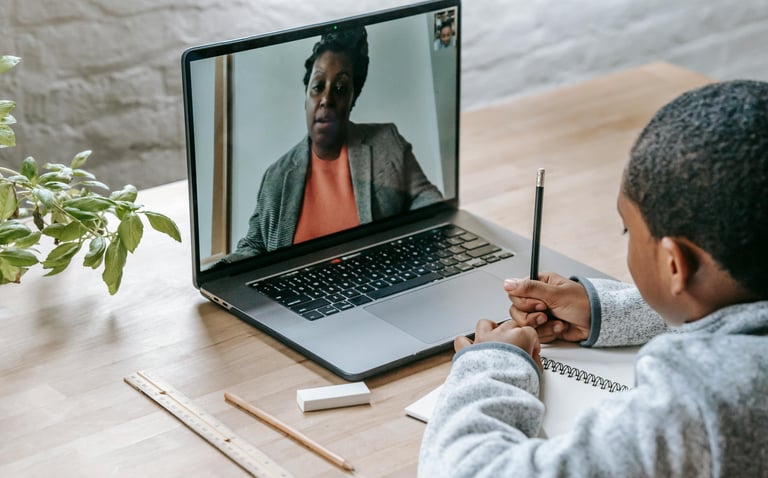
Discover how digital education in 2026 is transforming career development, skill-building, and job opportunities in a fast-changing, AI-driven world.
Keywords: digital education 2026, online learning careers, AI learning platforms, future of education, digital skills, remote learning, career development, e-learning trends
The Rise of Digital Education
Education in 2026 looks nothing like it did a decade ago. What was once considered “online learning” is now the foundation of modern education. Digital platforms, AI tutors, and creator-led courses have turned learning into an on-demand, highly personalized experience.
More importantly, education is no longer confined to classrooms or institutions. It’s happening everywhere—on laptops, phones, and immersive virtual environments.
Learning at the Speed of Industry
Traditional education often struggles to keep up with how fast industries evolve. Digital education solves this problem by adapting in real time.
Courses update instantly. New tools are integrated as they emerge. Learners can pivot quickly without losing years in outdated systems.
For example, a digital creator in 2026 can:
Learn AI video editing tools in days
Apply those skills immediately on platforms like TikTok or YouTube
Start generating income within weeks
This “learn → apply → earn” loop is redefining how careers begin.
Skills Over Degrees
One of the biggest shifts is how credibility is measured.
Degrees still matter—but they are no longer the only signal of expertise. Employers and clients are increasingly focused on proof of work.
In today’s landscape, what stands out is:
A strong digital portfolio
Real-world projects or case studies
Active online presence or personal brand
This shift benefits self-starters and creators who can demonstrate value without following traditional academic paths.
The Era of Hybrid Careers
Careers in 2026 are no longer linear. People are blending multiple skills to create unique, flexible roles.
A single professional might combine:
Content creation + AI tools
Marketing + data analytics
Design + coding
Digital education makes this possible by allowing learners to pick and combine skills from different domains without restriction.
The Challenge: Too Much Information
While access to knowledge has improved, it comes with a new problem—overload.
Not all courses are high quality. Not all learning paths are effective. Without direction, it’s easy to consume endlessly without building real skills.
Successful learners focus on:
Clear goals (what they want to build or achieve)
Structured learning paths
Consistent execution, not just consumption
In 2026, discipline is just as important as access.
What’s Next: Immersive Learning and AI Mentors
The next evolution of digital education is already here.
Virtual reality classrooms, AI tutors, and simulation-based learning are making education more interactive and practical. Instead of just watching lessons, learners can practice real-world scenarios in controlled environments.
Imagine training for a job before ever applying for it—this is becoming a reality.
Final Thought
Digital education has shifted the question from “What should I study?” to “What do I want to build?”
Careers are no longer fixed paths. They are evolving projects shaped by skills, creativity, and continuous learning.
In 2026, the opportunity is clear: those who learn fast, adapt quickly, and take action will lead.
If you’re building your career today, don’t wait for permission—start learning, start creating, and let your work speak for itself.
:::
Would you like me to also turn this into a high-converting LinkedIn carousel or a short-form video script for your content channels?
Thank you
Related Stories
standby-studios © 2025
Terms & Conditions
We care about your data in our privacy policy.
Get the week's best tech and creator stories, every Friday
Subscribe to our newsletter and never miss a story.